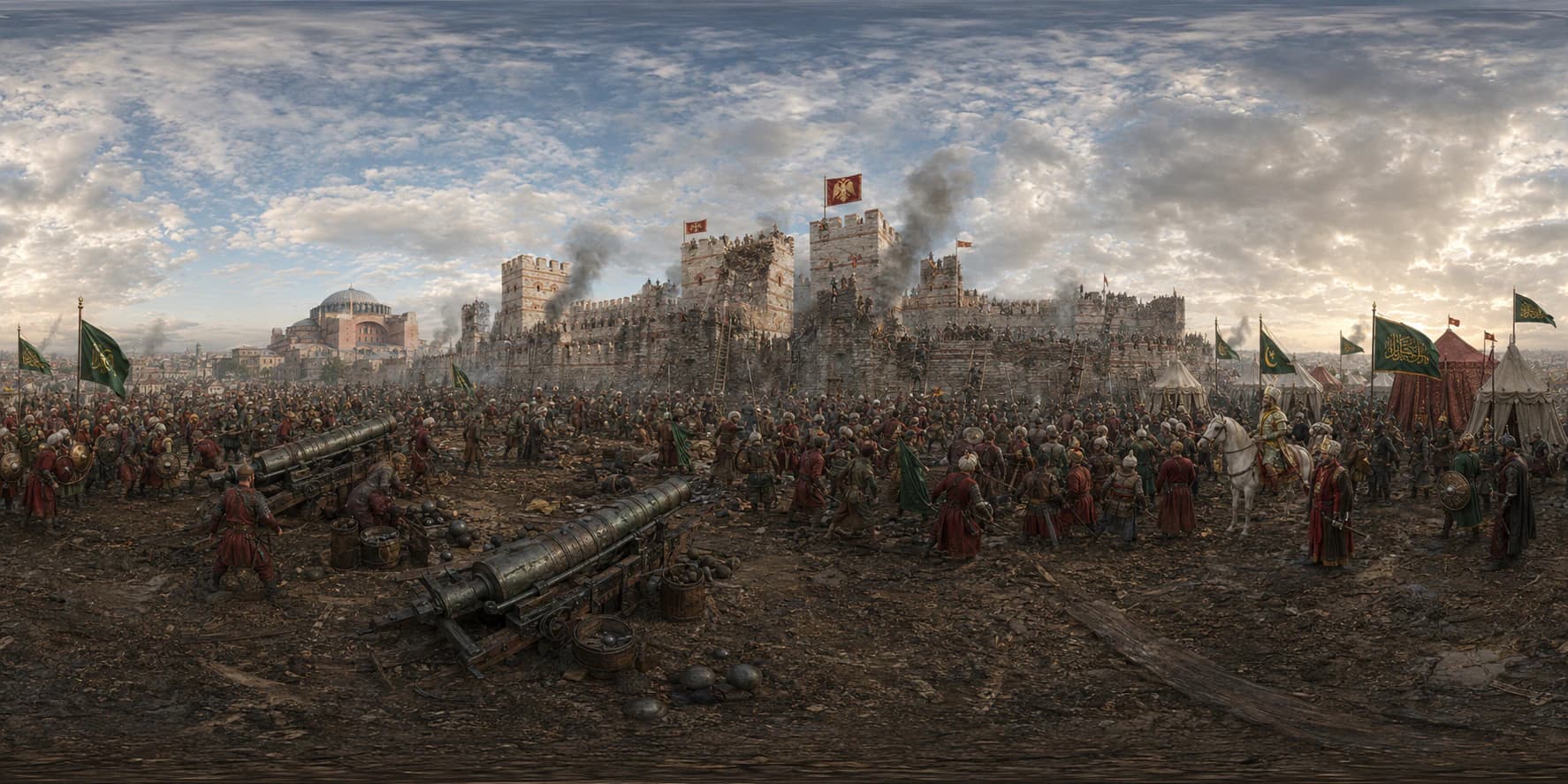
1453 · Constantinople, present-day Istanbul, Turkey
Fall of Constantinople: visual clues and historical context
The Fall of Constantinople saw the Ottoman Empire capture the Byzantine capital after a major siege.
What happened?
The Fall of Constantinople saw the Ottoman Empire capture the Byzantine capital after a major siege.
This scene represents the Fall of Constantinople, which ended the Byzantine Empire and marked a turning point in siege warfare, imperial power, and the eastern Mediterranean world.
Why it matters
The fall ended the Byzantine Empire and reshaped the balance of power in the eastern Mediterranean and southeastern Europe.
Visual clues that reveal the time period
Start with objects that have a clear historical range. Equipment, dress, construction methods and technology usually provide a stronger date than the mood or colour of a reconstruction.
Visual clues that reveal the location
Once the period is plausible, use terrain, architecture, waterways, street plans, landmarks and political context to move from a broad region to the recorded place.
Common wrong guesses
These alternatives share part of the scene's visual language, which makes them useful comparisons rather than random mistakes.
A Crusader siege
It may share the broad type of scene, but its equipment and chronology do not fit the combined evidence for Fall of Constantinople.
Ancient Rome
The setting can look similar at first glance, yet the architecture, terrain and location markers point elsewhere.
A generic medieval walled city
This is a reasonable generic fallback, but it does not explain the scene's full combination of date, place and material clues.
How to use this clue style in Then & There
Do not stop at recognising that a scene is a battle, ceremony, disaster or protest. Build a short evidence chain: identify the broad era, test it against the people and technology, then use the landscape and built environment to place it. Submit only when the year and map pin tell the same historical story.
Scene curation note: The scene should reflect Constantinople before later Ottoman architectural changes. Avoid modern Istanbul, later landmarks such as the Blue Mosque, modern roads, modern ships, and fantasy city design.
Further reading and next steps
Use the source link to continue beyond the reconstruction, then test the same style of clue reading in the game.
Read more about Fall of Constantinople